Biopics are meant to illuminate. They promise insight into who a person truly was—what drove them, what haunted them, how they changed the world or were changed by it. The Michael Jackson movie doesn't deliver on that promise. Instead, it reduces one of the most complex cultural figures of the 20th century to a sequence of well-known hits, rehearsed mannerisms, and sanitized flashbacks. It checks the boxes of a life story—child stardom, rise to fame, personal struggles, tragic end—but does so without meaning, without weight. It’s a museum exhibit with all the lights on but none of the soul.
This isn’t just a case of poor execution. It’s a failure of intent. The film avoids the hard questions, sidesteps the contradictions, and refuses to engage with the discomfort that defined Jackson’s later years. In doing so, it violates the central duty of the biopic: to reveal truth, not just reenact events.
The Hollow Core: Performance Without Insight
The lead performance is technically impressive. The actor captures Jackson’s voice, the glide of his walk, the tilt of his hat. But mimicry isn’t understanding. Watching him dance through Billie Jean in an empty studio isn’t revelatory—it’s empty spectacle. The film substitutes choreography for character development.
Consider this: in three separate scenes, the protagonist rehearses Smooth Criminal. Each time, the camera lingers on the lean, the hat, the glove. But never once do we learn what that performance meant to Jackson personally. Was it empowerment? Escapism? A defiance of gravity—literal and metaphorical? The movie never asks.
Compare this to Capote, where every whisper and smirk reveals layers of guilt and manipulation, or Bohemian Rhapsody, flawed as it is, which at least attempts to show Freddie Mercury’s internal conflict between fame and identity. The Michael Jackson movie presents a man in motion but never at war with himself. That’s not just a missed opportunity—it’s a betrayal of the subject.
Avoiding the Real Story: The Elephant in the Recording Studio
No discussion of Michael Jackson is complete without confronting the allegations against him. The film acknowledges them only through a single, fleeting courtroom montage—37 seconds of news clips and shouting protesters. It’s treated as a minor scandal, a speed bump on the road to Bad’s release.
But those accusations aren’t background noise. They’re central to how the world sees Jackson now. A responsible biopic doesn’t have to convict or acquit. It has to grapple. It should show how the allegations fractured his relationships, distorted his public image, and possibly deepened his isolation.
Instead, the movie treats them like a public relations issue—a crisis to be managed, not a moral reckoning to be faced. It’s as if the filmmakers were terrified of alienating fans or inviting backlash. But art that fears controversy is art that fails.
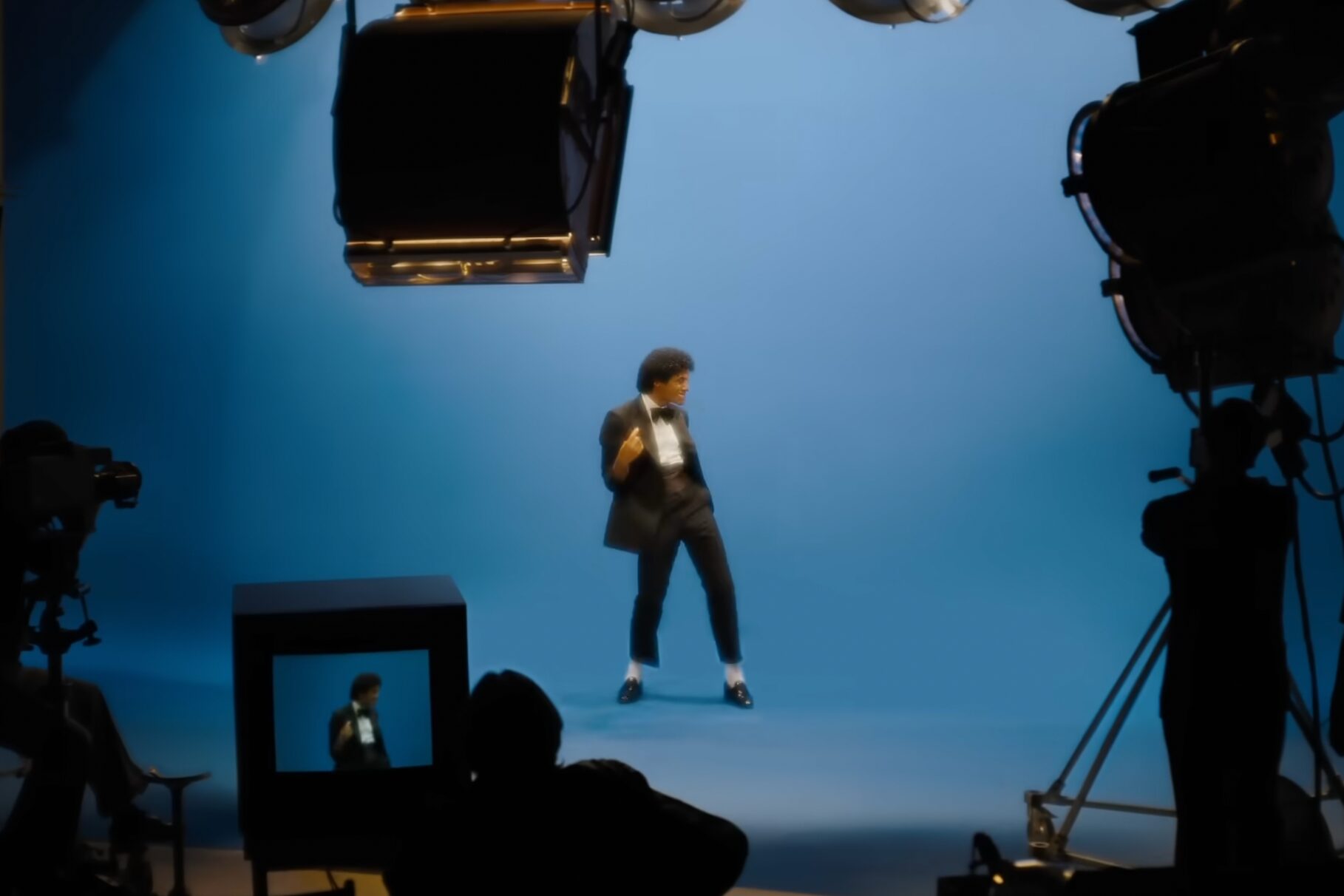
Real biopics don’t flinch. The People v. O.J. Simpson didn’t pretend domestic violence didn’t happen. I, Tonya didn’t excuse abuse but forced viewers to sit with its origins. The Michael Jackson movie doesn’t even attempt that balance. It edits out the pain, the doubt, the ambiguity. What’s left is a polished mannequin wearing a white glove.
The Music, But Not the Meaning
The soundtrack is stacked—Thriller, Beat It, Man in the Mirror—all remastered, all perfectly timed for emotional crescendos. But hearing the songs isn’t the same as understanding them.
Take Earth Song. The film uses it during a montage of Jackson feeding orphans and hugging sick children. It’s presented as pure altruism. But the real Earth Song was born from grief, from Jackson’s growing despair over war, deforestation, and animal cruelty. It was spiritual anguish turned into protest. Reducing it to a backdrop for charity photos strips it of its power.
Similarly, Black or White appears during a sequence celebrating Jackson’s global fanbase. But the original video was controversial—it included racial imagery, a panther transformation, and a message about unity that many found naive or performative. The film ignores all of that. It uses the song like a branding tool, not a statement.
This is a pattern: the music is treated as product, not expression. The film never explores how Jackson’s sound evolved—from the Motown precision of ABC to the industrial funk of Thriller to the paranoid whisper of HIStory. Those shifts weren’t just artistic choices. They were reflections of a man losing touch with reality, obsessed with perfection, alienated from his own body.
The Jackson Family: A Supporting Cast With No Lines
The Jackson family appears in bits—Joe barking orders, Katherine praying silently, young Michael trembling before Motown executives. But none of them are allowed to be fully realized. They exist only in relation to the star.
Joe Jackson, in particular, is reduced to a cartoon villain—yelling, slapping, demanding more. But real people aren’t that simple. He was a product of his time, a Black father trying to get his sons out of Gary, Indiana, by any means necessary. Was he abusive? Yes, by today’s standards. But the film doesn’t explore how that environment shaped Michael’s work ethic, his need for control, his fear of failure.
Even Janet and Rebbie appear for a total of 90 seconds—smiling, clapping, vanishing. There’s no hint of sibling rivalry, no conversation about shared trauma, no moment where Michael leans on them. The film pretends he operated in a vacuum.
Compare that to One Love, the Bob Marley biopic, which wove family conflict, spiritual doubt, and political tension into the narrative. Or Ray, where Ray Charles’ relationships with his mother and wife were central to his journey. The Michael Jackson movie treats family like set dressing.
Style Over Substance: Aesthetic Without Purpose
Visually, the film is stunning. The recreations of the Thriller video shoot are meticulous. The costumes, the makeup, the lighting—all immaculate. But beauty without purpose is decoration.
One scene shows Jackson standing alone in a mirror-lined room, dozens of versions of himself staring back. It’s a striking image—potentially powerful. But the film doesn’t follow through. Is this about identity? Loneliness? The fragmentation of self? It never says. The shot lasts 12 seconds, then cuts to a concert.

This happens repeatedly. Elaborate visuals are introduced, then abandoned. A surreal dream sequence with elephants and masks nods at Jackson’s eccentricity but never explores its roots in chronic pain, insomnia, or medical abuse. A flashback to Neverland shows children laughing on rides—but omits the creeping unease that later defined the estate.
The film mistakes aesthetic homage for emotional depth. It wants to look like a Michael Jackson story, not be one.
What a Real Michael Jackson Biopic Would Do
A truthful biopic wouldn’t shy away from contradictions. It would show:
- The 11-year-old Michael singing I Want You Back with terrifying precision, already a machine.
- The adult Jackson crying after a concert, convinced he’d failed—even though the crowd roared.
- His obsession with Peter Pan and childhood as both escape and pathology.
- His genius in the studio, layering vocals, demanding 50 takes, bending sound to his will.
- His physical transformation not as vanity, but as a symptom of vitiligo, lupus, and chronic pain.
- The loneliness of being idolized but never truly seen.
It wouldn’t excuse his actions. It wouldn’t glorify his pain. But it would connect the dots between trauma, talent, and tragedy.
Imagine a scene where Jackson watches the Leaving Neverland trailer for the first time. Not to defend or deny, but to show his reaction—confusion, anger, sorrow, denial. That’s courage. That’s cinema.
Conclusion: Biopics Owe Us Truth, Not Tribute
The Michael Jackson movie is a tribute act. It’s polished, nostalgic, and ultimately empty. It fails the basic duty of a biopic: to make us understand, not just remember.
We don’t need another statue. We need a mirror.
If you’re going to tell a life story, especially one as complicated as Michael Jackson’s, you have to risk discomfort. You have to ask hard questions. You have to let the audience walk away unsettled, conflicted, changed.
This film doesn’t. It protects the myth. It preserves the brand. And in doing so, it disrespects the man.
For fans, for critics, for anyone who believes cinema can do more than repackage fame—demand better. Support films that dare to show the cracks in the mask. Because the truth, however messy, is always more compelling than the performance.
FAQ
Why is the Michael Jackson movie considered a bad biopic? Because it prioritizes spectacle over insight, avoids confronting Jackson’s controversies, and fails to explore his psychological complexity.
Does the movie address the abuse allegations? Only briefly and superficially, through a short montage of news footage, without meaningful exploration or context.
Is the lead actor’s performance good? Technically strong in mimicry, but lacks emotional depth or psychological authenticity.
How does the film handle Jackson’s music? It uses songs as background for key moments but ignores their deeper meanings and evolution as artistic expressions.
What should a Michael Jackson biopic focus on? His artistic genius, personal trauma, family dynamics, physical transformation, and the tension between his public image and private struggles.
Are there any good biopics about musicians for comparison? Yes—Ray, Control (about Ian Curtis), Walk the Line, and Amy offer deeper, more honest portrayals of complex artists.
What’s the main problem with sanitized celebrity biopics? They reduce real, flawed human beings to one-dimensional icons, avoiding the truths that make their stories worth telling.
FAQ
What should you look for in The Michael Jackson Movie Fails at the Basic Duty of a Biopic? Focus on relevance, practical value, and how well the solution matches real user intent.
Is The Michael Jackson Movie Fails at the Basic Duty of a Biopic suitable for beginners? That depends on the workflow, but a clear step-by-step approach usually makes it easier to start.
How do you compare options around The Michael Jackson Movie Fails at the Basic Duty of a Biopic? Compare features, trust signals, limitations, pricing, and ease of implementation.
What mistakes should you avoid? Avoid generic choices, weak validation, and decisions based only on marketing claims.
What is the next best step? Shortlist the most relevant options, validate them quickly, and refine from real-world results.