Golf is often a solitary pursuit—player versus course, mind versus pressure. But for Alex Fitzpatrick, the moment he clinched his PGA Tour card wasn’t just about personal triumph. It was the culmination of a shared journey, one anchored in brotherhood, sacrifice, and the quiet strength found in family. His emotional victory wasn’t just his own—it belonged as much to his older brother, Matthew, whose legacy both loomed large and lifted him forward.
This is the story of how two brothers, one already a household name and the other fighting for recognition, turned a season of pressure into a breakthrough moment that resonated far beyond the leaderboard.
The Shadow and the Support: Growing Up Fitzpatrick
Alex Fitzpatrick never had the luxury of an anonymous golf career. From his earliest junior tournaments, he was introduced as “Matthew’s brother.” Matthew Fitzpatrick, the 2013 U.S. Amateur champion and a multiple-time European Tour winner, set a high bar—not just in performance, but in work ethic and composure.
For Alex, that duality—pride in his brother’s success, pressure to emerge from his shadow—became a defining tension.
“He’s been my biggest critic and my biggest supporter,” Alex once said in an interview. “When I’m struggling, he doesn’t sugarcoat it. But when I do something right, his approval means more than anyone else’s.”
That dynamic wasn’t just emotional—it was practical. Matthew didn’t just cheer from the sidelines. He mentored. He reviewed swing footage. He pushed Alex in practice rounds at their home course, Moor Allerton in Yorkshire. There were no free passes.
And when Alex faced setbacks—missed cuts, stalled momentum, doubts about his path—it was often Matthew who reminded him why he started.
The Climb: From Shadow to Standout
Alex’s road to the PGA Tour wasn’t linear. While Matthew surged early, Alex developed at his own pace. Collegiate golf in the U.S. at Wake Forest gave him structure, competition, and exposure. But turning pro brought new challenges: inconsistent form, the grind of lower-tier tours, and the psychological toll of near-misses.
In 2023, Alex played primarily on the Korn Ferry Tour, the primary pathway to the PGA Tour. The season demanded consistency. Every tournament counted. Every shot carried weight.
Halfway through the year, Alex was on the bubble—ranked just outside the top 30 needed for automatic promotion. One bad week could derail everything. One good week could change his life.
Then came the LECOM Suncoast Classic.
The Breakthrough: An Emotional Victory in Florida
The LECOM Suncoast Classic wasn’t supposed to be the defining moment. It wasn’t a major, nor was it televised nationally. But for Alex, it became everything.
He entered the final round one shot behind. Conditions were windy. The greens were slick. Pressure mounted with every tee shot.
On the 18th hole, facing a 15-foot birdie putt to win outright, Alex stood over the ball, heart pounding. The gallery was quiet. Somewhere in the back of his mind, he could hear Matthew’s voice: “Trust your line. You’ve done this a thousand times.”
The ball rolled true. It dropped.
The reaction was instant—Alex dropped his putter, fell to his knees, and covered his face. Tears streamed down. It wasn’t just relief. It was release. Years of effort, doubt, and comparison poured out in a single moment.
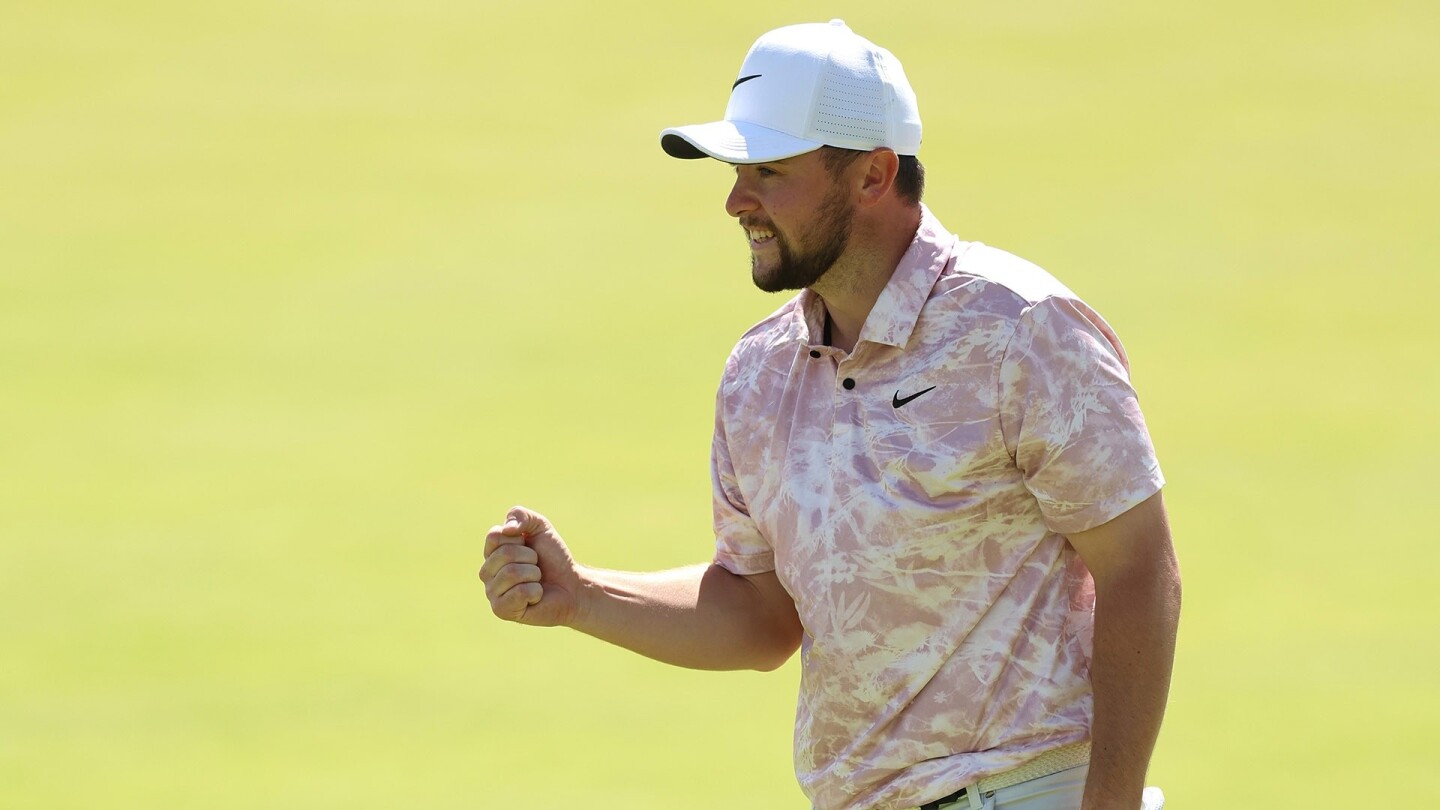
When Matthew embraced him on the green, the image went viral. Two brothers, one dream realized.
Why This Victory Resonated Beyond the Scorecard
Golf fans don’t just follow scores—they follow stories. And Alex Fitzpatrick’s breakthrough wasn’t just about skill. It was about humanity.
Consider the context:
- The sibling rivalry turned support system. Unlike narratives of competition, the Fitzpatrick brothers represent a rare model of familial collaboration in elite sports.
- The underdog arc. Alex wasn’t the prodigy. He wasn’t the early standout. His victory was earned through persistence.
- The emotional authenticity. In an era where athletes are often coached to suppress emotion, Alex’s raw reaction reminded fans that sports still matter deeply.
“I’ve watched him work harder than anyone I know,” Matthew said after the win. “To see him rewarded like this—it means the world to me.”
That moment wasn’t just a personal win. It was a quiet rebuttal to the myth that greatness must be solitary.
The PGA Tour: What Comes Next
Earning a PGA Tour card is not the end—it’s the beginning of a new pressure-cooker. The competition is steeper. The scrutiny is sharper. The margin for error shrinks.
But Alex arrives with advantages:
- A proven ability to handle pressure, demonstrated in his final-round composure at the LECOM.
- A world-class support system, with Matthew offering tactical and emotional guidance.
- A game built for adaptability—Alex’s iron play and short game, honed over years of close observation and practice with his brother, are PGA-ready.
Still, challenges remain.
Adjusting to the travel schedule. Managing expectations. Avoiding the trap of complacency after a breakthrough.
“I’m not done proving myself,” Alex said in his post-victory press conference. “This gets me to the table. Now I have to earn my place at it.”
What This Means for Golf’s Next Generation
The Fitzpatrick brothers’ story is more than personal—it’s symbolic.
For young golfers watching, it sends a message: success isn’t always immediate. It isn’t always loud. Sometimes, it’s built in the quiet hours between tournaments, in the advice from a sibling, in the decision to keep going when rankings don’t budge.
Coaches are now using Alex’s journey as a curriculum point:
- Long-term development over early hype
- Mental resilience as a train-able skill
- The value of mentorship—even when it comes from family
At junior academies across the UK and U.S., players are studying not just Alex’s swing, but his trajectory.
“He didn’t peak at 18,” one coach told his team. “He got better at 24. That’s the lesson.”
A Brother’s Role: Redefining Sibling Influence in Sports
Sibling relationships in sports are often framed as competitive—think the Williams sisters or the Bryan brothers. But the Fitzpatricks offer a different blueprint: one where the more established sibling doesn’t overshadow, but elevates.
Matthew hasn’t just opened doors for Alex—he’s handed him the tools to walk through them on his own terms.
This model is gaining attention in sports psychology circles. Experts point to the “proximal mentor effect”—when a close, high-performing peer (like a sibling) provides both aspiration and accessible guidance.

“It’s like having a CEO who also knows how to fix the printer,” one sports psychologist noted. “Matthew understands the highest level, but he also remembers what it felt like to miss a cut at 21.”
The Road Ahead: What to Watch in Alex’s PGA Tour Debut
Alex Fitzpatrick is expected to make his official PGA Tour debut at the Charles Schwab Challenge.
Key factors to monitor:
- Tournament selection: He’ll likely play events with sponsor exemptions before his full card activates.
- Caddie choice: Rumors suggest he may team with a seasoned PGA Tour caddie, possibly parting ways with his long-time amateur bagman.
- Media presence: With his name recognition and compelling story, expect feature coverage from Golf Channel and ESPN.
His performance won’t be measured just in strokes, but in adaptability. Can he maintain composure against the world’s best? Will his game hold up under the Tour’s aggressive setups?
One thing is certain: he won’t be walking the fairways alone—not in spirit.
Closing: The Power of Shared Victory
Alex Fitzpatrick’s victory wasn’t just a career milestone. It was a human one.
It proved that in the high-stakes world of professional golf, emotional support isn’t a distraction—it’s a weapon. That legacy isn’t a burden, but a launchpad. And that sometimes, the most personal achievements are the ones we reach together.
For aspiring athletes, the takeaway is clear: talent opens doors, but resilience—and the people who help you build it—carries you through.
Alex earned his place on the PGA Tour. But he didn’t get there alone.
Now, the real test begins.
FAQ
How did Alex Fitzpatrick qualify for the PGA Tour? Alex earned his PGA Tour card by finishing in the top 30 of the Korn Ferry Tour points list, highlighted by a victory at the LECOM Suncoast Classic.
Is Alex Fitzpatrick related to Matthew Fitzpatrick? Yes, Alex is the younger brother of Matthew Fitzpatrick, a multiple-time European Tour winner and major contender.
Did Matthew Fitzpatrick help Alex during his career? Yes, Matthew has been a mentor, practice partner, and emotional support throughout Alex’s development as a golfer.
What tournament did Alex win to secure his PGA Tour spot? Alex won the LECOM Suncoast Classic on the Korn Ferry Tour, a victory that significantly boosted his standings.
Will Alex and Matthew ever play together in a PGA Tour event? It’s likely. With Alex now on the PGA Tour, they could team up for events like the Zurich Classic, a PGA Tour tournament featuring two-player teams.
How long did it take Alex to reach the PGA Tour? Alex turned professional in 2021 and earned his PGA Tour card in 2023 after competing on the Korn Ferry Tour.
What’s next for Alex Fitzpatrick? He’s expected to make his PGA Tour debut soon, with early appearances likely at events offering sponsor exemptions or team formats.
FAQ
What should you look for in Fitzpatrick Brothers' Emotional Victory Secures Alex’s PGA Tour Spot? Focus on relevance, practical value, and how well the solution matches real user intent.
Is Fitzpatrick Brothers' Emotional Victory Secures Alex’s PGA Tour Spot suitable for beginners? That depends on the workflow, but a clear step-by-step approach usually makes it easier to start.
How do you compare options around Fitzpatrick Brothers' Emotional Victory Secures Alex’s PGA Tour Spot? Compare features, trust signals, limitations, pricing, and ease of implementation.
What mistakes should you avoid? Avoid generic choices, weak validation, and decisions based only on marketing claims.
What is the next best step? Shortlist the most relevant options, validate them quickly, and refine from real-world results.