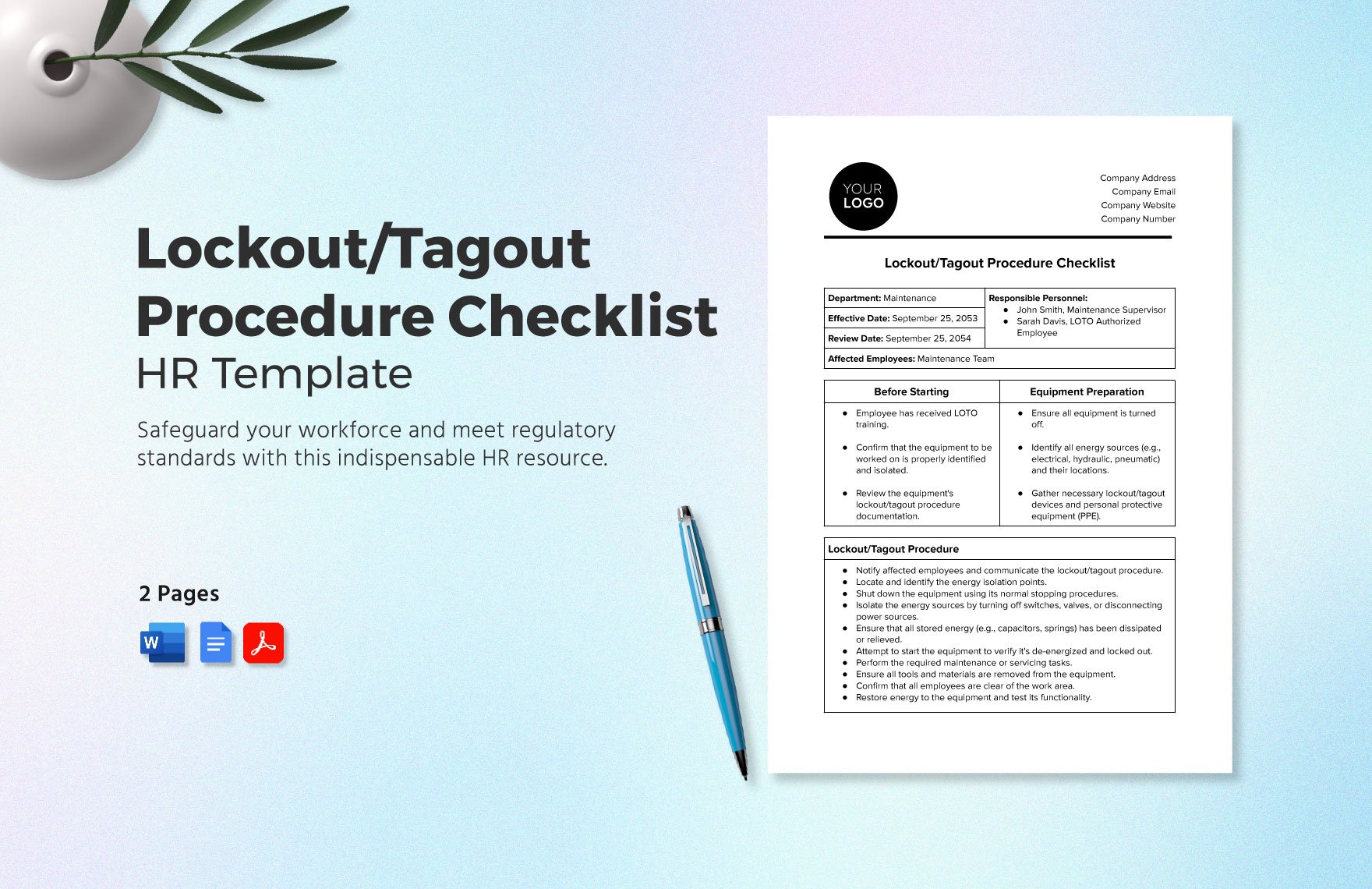
Every year, hundreds of preventable workplace injuries occur during equipment maintenance—all because proper lockout tagout (LOTO) procedures weren’t followed. The solution starts with a clear, actionable plan, and that’s where a free lockout tagout procedure template becomes indispensable. It’s not just about ticking a compliance box—it’s about creating a culture of safety that protects employees from hazardous energy releases.
A well-structured LOTO template standardizes the shutdown, isolation, locking, and verification process across machines and teams. Whether you’re in manufacturing, facilities management, or industrial services, having a ready-to-use, customizable procedure minimizes risk and simplifies training. This guide delivers a practical, free lockout tagout procedure template framework and shows you how to implement it effectively.
Why a Lockout Tagout Procedure Template Saves Time and Lives
Without a standardized LOTO process, employees rely on memory or inconsistent practices—especially during urgent repairs. That variability increases the chance of missing a critical step, like failing to verify zero energy or leaving a valve unlocked.
A template eliminates guesswork. It serves as a living document that:
- Guides workers through each phase of energy isolation
- Ensures consistency across shifts and equipment types
- Supports OSHA compliance (29 CFR 1910.147)
- Serves as training material for new hires
- Reduces downtime by clarifying responsibilities
For example, a food processing plant in Ohio reduced its machine-related incidents by 70% within a year of adopting a formal LOTO template. Their previous method relied on verbal instructions, which led to confusion during shift changes. The template brought clarity—and safety—with defined roles, visual aids, and verification steps.
Key Elements of an Effective Lockout Tagout Template
A useful free lockout tagout procedure template isn’t just a checklist. It includes structured sections that reflect real-world workflows. Use this framework to evaluate or build your own.
#### 1. Equipment Identification Clearly name the machine or system, including model number, location, and energy sources (electrical, hydraulic, pneumatic, etc.). Example: > Machine: Conveyor System #4 > Location: Packaging Line B, West Wing > Energy Sources: 480V electrical, compressed air (120 psi)
#### 2. Authorized Personnel List names or roles of employees trained to perform LOTO. Include contact info and verification of training completion.
#### 3. Step-by-Step Shutdown Procedure Outline the exact sequence to power down safely. Avoid vague language like “turn off machine.” Instead: > 1. Notify all affected employees. > 2. Press emergency stop button. > 3. Switch main disconnect to OFF. > 4. Close air shutoff valve at source.
#### 4. Energy Isolation Points Specify each lockable point (e.g., circuit breaker, valve) and the type of lock needed. Include lockout device type (hasp, valve lock, circuit breaker lock).
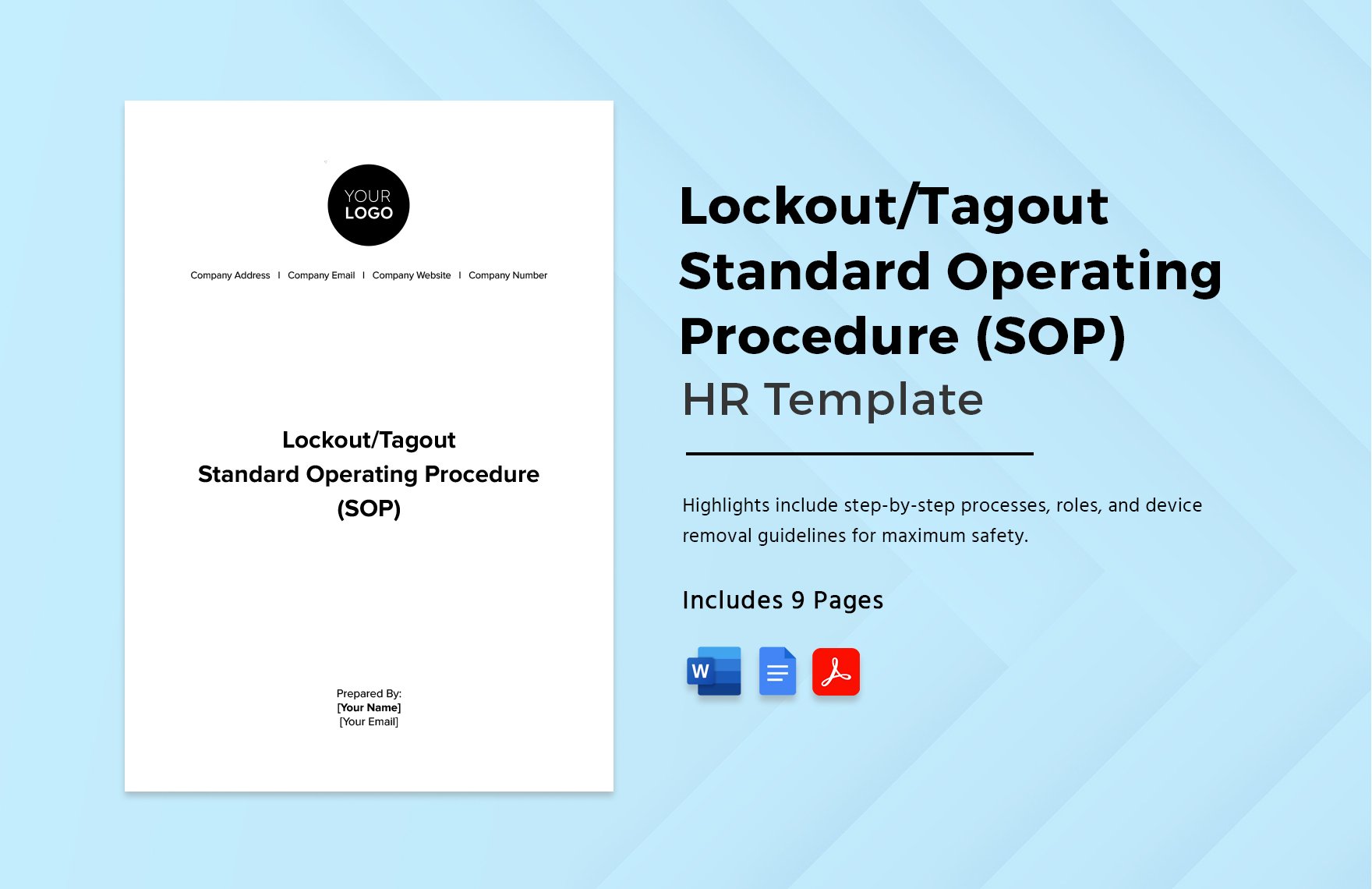
#### 5. Application of Locks and Tags Details who applies each lock, when, and with what tag message. Tags should include: - Employee name - Date and time - Reason for lockout
Example tag: “DO NOT OPERATE – Maintenance in Progress – John Doe, 9:15 AM”
#### 6. Verification of Zero Energy Require physical verification that all energy is dissipated. Common steps include: > - Attempt to restart (after confirming area is clear) > - Use voltage tester on electrical circuits > - Bleed pressure from lines
#### 7. Restoration Steps Outline the process for safely restarting: > - Confirm all tools removed > - Notify affected personnel > - Remove locks only by the original installer > - Restore energy gradually
Common Mistakes That Undermine LOTO Effectiveness
Even with a free lockout tagout procedure template, errors can slip in. Watch for these recurring issues:
- Group Lockout Confusion: Multiple workers on one machine but only one lock applied. Solution: Use a group lockout box where each technician places their personal lock.
- Tag Reliance Without Locks: Tags alone don’t physically prevent startup. Always pair with a lock.
- Skipping Verification: Assuming a machine is off without testing. Always verify zero energy.
- Inadequate Training: Employees who can’t read or understand the procedure. Use visuals and language-appropriate instructions.
- Template Never Updated: Adding a new machine but not updating the procedure. Review and revise annually or after changes.
One automotive parts manufacturer learned this the hard way when a worker bypassed a faulty conveyor’s lockout because the template didn’t cover the override mode. After an injury, they rebuilt all procedures to include exception handling.
Where to Find Reliable Free Lockout Tagout Procedure Templates
Not all free templates are created equal. Many are too generic or lack OSHA alignment. Here are five trusted sources offering practical, downloadable LOTO templates:
| Platform | Features | Best For |
|---|---|---|
| OSHA.gov | Official guidelines, sample formats, compliance-focused | Regulatory alignment, training |
| CDC/NIOSH | Industry-specific examples, hazard insights | High-risk environments (chemical, mechanical) |
| Creative Safety Supply | Fully customizable Word/PDF templates, multilingual options | Quick deployment, visual learners |
| EHS Daily Advisor | Editable templates with incident tracking logs | Teams needing audit trails |
| LockoutTagout.com | Equipment-specific LOTO forms (e.g., presses, mixers) | Specialized machinery |
Each offers a free version with core elements. Use them as a foundation, then tailor to your operation. For instance, a hospital using an autoclave can adapt a generic template by adding steam release protocols and PPE requirements.
How to Customize a Free Template for Your Workplace
A downloaded template won’t work perfectly out of the box. Follow these steps to make it operational:
- Conduct an Equipment Audit
- List every machine needing LOTO. Note energy types, isolation points, and common maintenance tasks.
- Map Real Maintenance Scenarios
- Shadow a technician during a repair. Document the actual steps taken—this reveals gaps in the template.
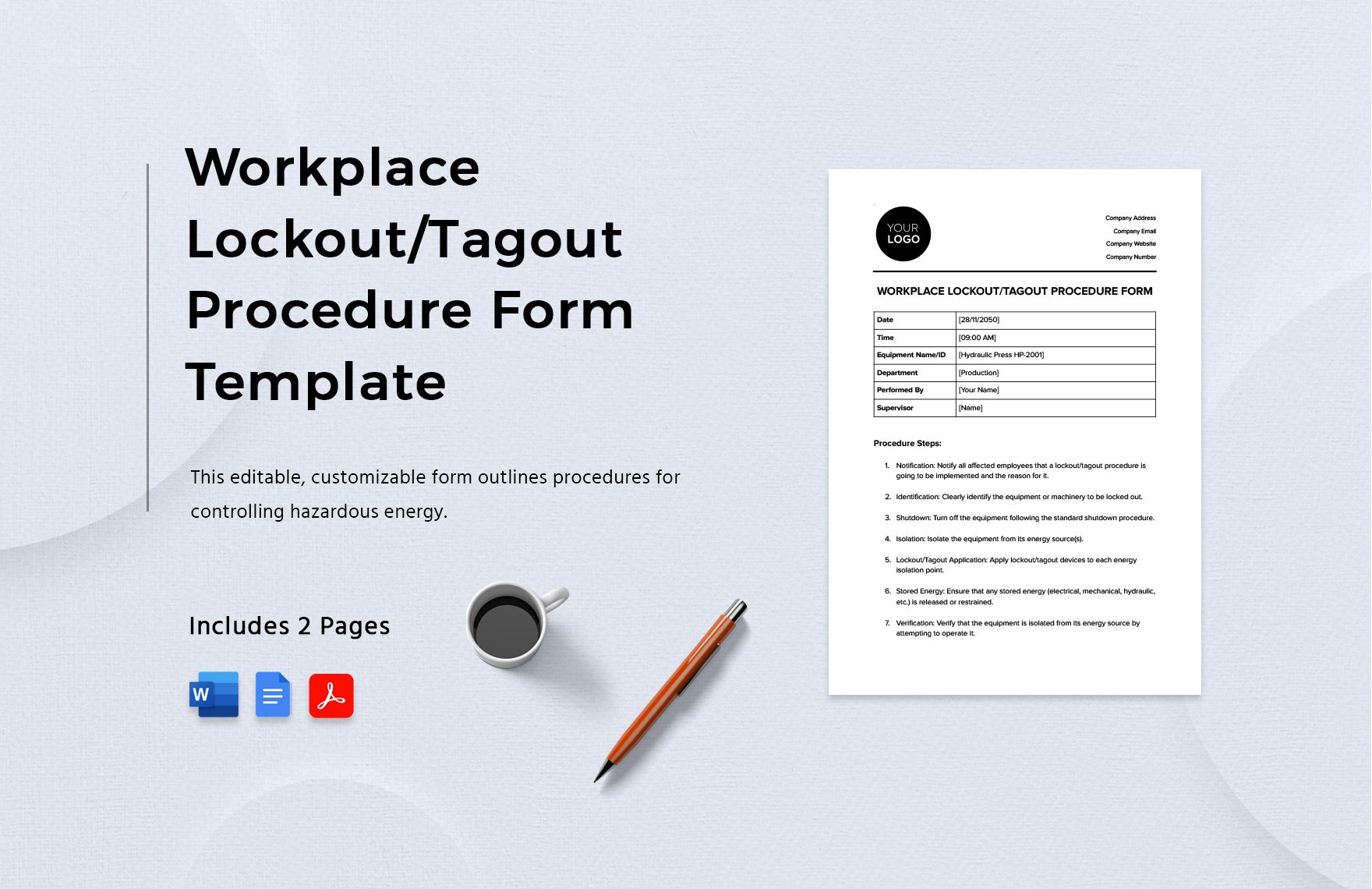
- Add Visuals
- Insert photos or diagrams of lock points. A picture of the main disconnect panel prevents confusion.
- Assign Roles Clearly
- Define who is “authorized” vs. “affected.” Only authorized employees apply locks.
- Integrate with Your Safety Program
- Link the template to training records, incident reports, and audit schedules.
A wastewater treatment facility improved compliance by 40% after adding QR codes to equipment. Scanning the code pulled up the digital LOTO procedure on a tablet—complete with photos and audio instructions.
Training and Enforcing LOTO Procedures
A template only works if people use it consistently. Training should include:
- Annual refreshers and documentation
- Hands-on practice with lockout devices
- Role-playing scenarios (e.g., shift change during lockout)
- Testing comprehension with short quizzes
Supervisors must enforce compliance without exception. One plant stopped all work for an hour when a manager was caught bypassing LOTO. The message was clear: safety isn’t negotiable.
Post procedures near equipment, but also store them digitally for quick access. Use brief safety huddles to review LOTO steps before high-risk tasks.
Why Digital Tools Are Enhancing Traditional LOTO Templates
While paper templates are still valid, digital LOTO systems are rising in popularity. They offer:
- Real-time lockout status tracking
- Automated notifications
- Integration with maintenance software
- Audit trails with timestamps
However, for small to mid-sized operations, a well-implemented free lockout tagout procedure template in PDF or printed form remains cost-effective and fully compliant. The key is accessibility and consistency—not technology.
Final Thoughts: Safety Starts
with a Simple Document
A free lockout tagout procedure template is more than administrative paperwork. It’s a frontline defense against injury, downtime, and regulatory penalties. Start with a reliable template from a trusted source, customize it to your equipment and workflow, and train your team to follow it without exception.
Download a template today, adapt it tomorrow, and conduct your first verified lockout by week’s end. Safety isn’t a project—it’s a practice. And it begins with one clear, well-documented step.
Frequently Asked Questions
What is a lockout tagout procedure template? It’s a standardized document that outlines the steps to safely shut down and isolate machinery from hazardous energy sources during maintenance.
Are free LOTO templates OSHA compliant? Many are, especially those from OSHA or reputable safety providers. Always verify alignment with 29 CFR 1910.147 before use.
Can I use one template for all machines? No. Each machine or energy system requires a specific procedure based on its unique shutdown and isolation points.
Who should use the LOTO template? Only authorized employees trained in energy control procedures should perform lockout/tagout.
Do tags replace locks? No. Tags are warnings, but locks are physical restraints. Both are required under OSHA standards.
How often should LOTO procedures be reviewed? Annually, or whenever equipment, processes, or personnel change.
Can I modify a free template? Yes—customization is essential. Adapt it to your equipment, workplace layout, and team roles for maximum effectiveness.
FAQ
What should you look for in Free Lockout Tagout Procedure Template for Safety Compliance? Focus on relevance, practical value, and how well the solution matches real user intent.
Is Free Lockout Tagout Procedure Template for Safety Compliance suitable for beginners? That depends on the workflow, but a clear step-by-step approach usually makes it easier to start.
How do you compare options around Free Lockout Tagout Procedure Template for Safety Compliance? Compare features, trust signals, limitations, pricing, and ease of implementation.
What mistakes should you avoid? Avoid generic choices, weak validation, and decisions based only on marketing claims.
What is the next best step? Shortlist the most relevant options, validate them quickly, and refine from real-world results.